



Grocery and food
In store, the customer reads the label.
Online, all they read is the page.
Allergens, origin, storage after opening, pack size: in the aisle, the customer turns the jar over and finds the answer. On your website, they can’t. Upsellr writes product pages that repeat what the label says, with the producer’s data, across your whole catalog.
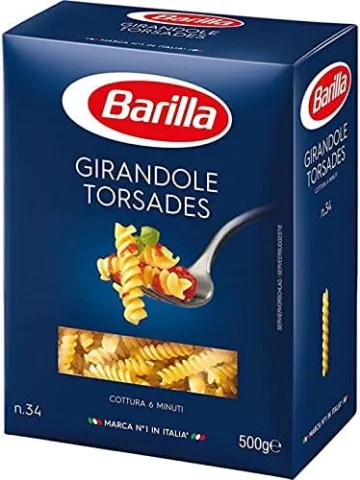
Barilla Girandole Twists No. 34, durum wheat semolina pasta, 500 g
Spiral twists that hold the sauce in their folds: ready in 6 minutes, for tomato sauces, pestos and pasta salads.
What they bring to the kitchen
- Spiral shape: the sauce clings to the twists
- Cooks in 6 minutes: a meal ready on weeknights
Product specifications
- Shape
- Twists, No. 34
- Ingredient
- Durum wheat semolina
- Net weight
- 500 g
- Cooking time
- 6 minutes
What the customer would ask the grocer
- “What pasta is it, exactly?”
- “Which sauce does it go with?”
- “How long does it take to cook?”
01The aisle’s challenges
What the label says,
the page has to say again.
Food is the aisle where an approximate statement commits the merchant. Six situations your customers run into every day, and what Upsellr does about them.
The whole aisle01
Allergens buried in the ingredients
The supplier file gives the ingredient list as one block, capitals included. A customer with an allergy wants a clear answer, and so do your filters.
PDF extractionFrom the supplier
Ingredients: WHEAT flour, butter, sugar, EGGS, hazelnuts 4%
On your page
Allergens: gluten, milk, eggs, nuts, taken from the producer’s technical sheet
Savoury and sweet grocery02
250 g, 0.25 kg or 250GR
Every supplier writes weights and volumes its own way. Two identical references look different and your pack size filters stop finding anything.
Harmonized units and valuesFrom the supplier
250GR0.25 kg250 g e
On your page
Net weight: 250 g, written the same way on every page of the channel
Wines and spirits03
A wine isn’t described like a biscuit
Every family has the data that drives the purchase: grape, vintage and alcohol content for a wine, cocoa content for a chocolate, roast for a coffee.
Attributes by categoryFrom the supplier
CDR ROUGE 2022 75CL
On your page
Grape varieties, vintage, alcohol content, serving temperature and allergens filled in
Fresh produce04
Storage and shelf life
In the fridge or at room temperature, how many days after opening: these statements decide what the customer buys and what you can ship. They’re often printed on the packaging, not in the file.
Photo analysisFrom the supplier
Keep cool
On your page
Storage: refrigerate after opening, consume within 3 days, read from the photo of the label
Organic and regional05
Origin and labels: nothing approximate
Country of origin, PDO, PGI, organic label: customers look for them and regulations govern their use. An origin isn’t guessed, it’s found at the producer.
Website searchFrom the supplier
Organic olive oil
On your page
Country of origin: Spain, AB organic label, found on the producer’s website, source kept
The sector’s marketplaces06
Amazon and the rest: their fields, not yours
Every food marketplace has its own categories, mandatory fields and value lists for allergens and origin. An incomplete listing doesn’t go live.
MarketplacesFrom the supplier
Category: Grocery
On your page
Filed in the marketplace’s category tree, allergens and origin in its fields, exported in its template
02The Grocery library
Everything a food product page needs,
ready to go.
Upsellr gives you a library built for grocery and food: the aisle’s product families, from wines to fresh produce, each family’s attributes with their units and value lists, allergens and storage included, and the fields that make up a product page in the sector. Your Grocery channel starts with it, with nothing to model.
- 10product families
- 37product attributes
- 31ready-made value lists
- 4page fields, each with its instructions
 Marcus
Your channel receives the sector library: its families, their characteristics and their value lists.
The sector’s page template arrives with its sections, each with its own expert instructions.
Every generated page follows this template, with your product’s data.
03The aisle’s tone
An origin and a process
instead of adjectives.
Precise and understated, a wine merchant who explains rather than a sommelier who celebrates: the reader wants to know what they’re buying and when to enjoy it.
This exceptional oil of rare elegance will elevate all your dishes! A must-have for discerning foodies.
Picual olives, cold-pressed in Andalusia. A green, fruity oil for dressing and gentle cooking. 50 cl tinted glass bottle, to be kept away from light.
Do
- An origin, a process, a temperature
- The pack size or volume, from the first sentence
- When to enjoy it and how to store it
- Producer data presented as such: “stated ageing potential of five years”
Avoid
- Superlatives, lyricism and exclamation marks
- Any made-up tasting note
- An origin or allergen missing from the sources
04In the sector
One aisle,
four ways to sell it.
 Food wholesalers and buying groupsThousands of references from dozens of producers, in Excel, CSV or PDF technical sheets.
 Delicatessens and online wine merchantsNew arrivals and vintages to get online fast, without copying out every label.
 Producers and food brandsThe same ingredients, allergens and origin at every reseller and in every language.
 Retail chains and store networksThe same product standards on the website, in click-and-collect and at partners.
Your questions.
Straight answers.
What you need to know before you start.
Can Upsellr find a product’s allergens?
Yes. The enrichment agent reads them in the producer’s technical sheet, on its website or in the photo of the packaging, and keeps the source of every value. An allergen missing from the sources is never added or removed by deduction.
My wines have vintages that change every year: how does that work?
Vintage, grape variety, alcohol content and serving temperature are attributes of the Wines family. A new vintage is updated in the master data, and each channel page is regenerated with the right year, after your approval.
I also sell on Amazon or other marketplaces: how does that work?
Each marketplace listing is written to the channel’s rules: category, mandatory fields, value lists. Connectors are on their way; in the meantime, the listing exports in the marketplace’s template.
What happens when a statement is missing?
Nothing is made up: the enrichment agent searches at the producer, in the technical sheets and in the photos of the packaging. If the value still can’t be found, the field stays empty and the page flags it as to be completed.
My store already has its categories: what happens to the sector library?
It’s a starting point while your store can’t be read yet. As soon as your store or your PIM is connected, your own categories apply, and you can add your own attributes.
Other sectors
Your grocery aisle,
with pages true to the label.
Try it on your products or see Upsellr on your aisle in a personalized demo.





 Amazon