



Home and decor
A photo makes them want it.
Dimensions make them buy it.
Tabletop width, solid oak or veneer, delivered assembled or flat-packed, E27 base or integrated LED: in store, the customer measures, touches and asks. Upsellr writes product pages that answer for you, with the manufacturer’s data, across your whole catalog.
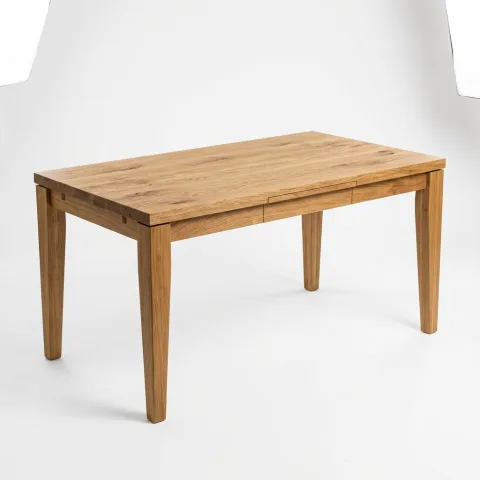
Extending dining table in oiled solid oak, 160 to 220 cm, seats 6 to 8
For a dining room or a living space: a 160 cm top that extends to 220 cm with its leaf, to seat six to eight guests.
What it changes at home
- Extension leaf stored under the top: nothing to put away
- Oiled oak: a scratch can be touched up with fine sandpaper
Specifications
- Dimensions (L × W × H)
- 160 to 220 × 90 × 75 cm
- Main material
- Solid oak, oiled finish
- Assembly required
- Yes, fittings included
- Net weight
- 48 kg
What the customer would ask in store
- “How many people can it seat?”
- “What if it gets scratched?”
- “Will it fit in my dining room?”

01The aisle’s challenges
What they can’t touch,
the page has to tell them.
Home customers choose by eye as much as by measurement, without touching the material or placing the piece in their home. Six situations your customers run into every day, and what Upsellr does about them.
Furniture01
Will it fit?
Furniture comes back first and foremost because it doesn’t fit. The full dimensions are often in the manufacturer’s PDF data sheet, not in the file.
PDF extractionFrom the supplier
Oak table 160
On your page
Dimensions: 160 to 220 × 90 × 75 cm, leaf included, extracted from the manufacturer’s data sheet
The whole aisle02
Nat. wood, light oak or natural
Every supplier writes its colors and materials its own way. Your filters stop finding anything and two identical tables look different.
Harmonized units and valuesFrom the supplier
Nat. woodLight oakNATURAL
On your page
Color: natural wood, written the same way on every page of the channel
Lighting03
A light isn’t described like a table
Every family has the data that drives the purchase: dimensions and number of seats for a table, lamp base, luminous flux and color temperature for a light.
Attributes by categoryFrom the supplier
Natural rattan pendant D40
On your page
E27 base, 40 cm diameter, material, style and room filled in
Wall decor, rugs04
Style is seen, not written
Scandinavian, industrial or boho: customers filter by style, and the supplier file almost never gives it. The enrichment agent reads the product photos and suggests the style and color, for you to approve.
Photo analysisFrom the supplier
Rug 160x230 ref. 4471
On your page
Style: boho, color: beige, read from the product photos
Furniture and storage05
Delivered assembled, or flat-packed?
A flat-packed piece of furniture isn’t for the same customer as one delivered assembled. If the page doesn’t say so, the purchase is decided on delivery, and so is the return.
Document selectionFrom the supplier
Oak sideboard 3 doors
On your page
Assembly required: yes. Assembly instructions attached to the page
The sector’s marketplaces06
Amazon and the rest: their rules, not yours
Every marketplace has its own home categories, mandatory attributes and value lists. A sofa without dimensions or a light without a lamp base doesn’t go live.
MarketplacesFrom the supplier
Category: Lighting
On your page
Filed in the marketplace’s category tree, mandatory fields filled in, exported in its template
02The Home library
Everything a home product page needs,
ready to go.
Upsellr gives you a library built for home and decor: the aisle’s product families, each family’s attributes with their units and value lists, from style to color temperature, and the fields that make up a product page in the sector. Your Home channel starts with it, with nothing to model.
- 10product families
- 38attributes, from style to dimensions
- 21ready-made value lists
- 4page fields, each with its instructions
 Marcus
Your channel receives the sector library: its families, their characteristics and their value lists.
The sector’s page template arrives with its sections, each with its own expert instructions.
Every generated page follows this template, with your product’s data.
03The aisle’s tone
Named materials,
not moods.
Warm and concrete, never lyrical: the reader pictures the product in their home and wants to know if it fits, literally.
This authentic, warm table will bring a unique touch to your interior! A must-have to elevate every meal.
Oiled solid oak table, 180 × 90 cm: seats six comfortably. Delivered flat-packed, it takes two people to assemble. A scratch can be touched up with fine sandpaper, without sanding the whole top.
Do
- “Oiled solid oak” rather than “warm”
- The measurements that decide: seats, height, diameter
- What the room gains and what upkeep it takes
- Manufacturer data written as such: “stated seat height”
Avoid
- Superlatives and exclamation marks
- Decor catalog vocabulary
- Any value missing from the sources
04In the sector
One interior,
four ways to furnish it.
 Wholesalers and importersThousands of references from dozens of manufacturers, with photos but few dimensions.
 Decor shops and online concept storesCollections that change every season, to get online without spending your evenings on it.
 Furniture and decor brandsThe same dimensions and the same materials at every reseller and in every language.
 Furniture retail chainsThe same product standards on the website, in store and on marketplaces.
Your questions.
Straight answers.
What you need to know before you start.
Can Upsellr find missing dimensions?
Yes. The enrichment agent looks for them on the manufacturer’s website and in its PDF data sheets, and every value found keeps its source. A dimension that can’t be found isn’t made up: the page doesn’t mention it.
A product’s style is subjective: how is it chosen?
Style comes from the product’s data, or from the enrichment agent reading its photos. It’s picked from a value list you can edit, and nothing is published without your approval.
Do care instructions appear on the page?
Yes, when they’re in the product’s data or on the manufacturer’s side: machine washable, dishwasher-safe, wipe clean. The page uses them as they are, without adding any.
I also sell on Amazon or other marketplaces: how does that work?
Each marketplace listing is written to the channel’s rules: category, mandatory attributes, value lists. Connectors are on their way; in the meantime, the listing exports in the marketplace’s template.
My store already has its categories: what happens to the sector library?
It’s a starting point while your store can’t be read yet. As soon as your store or your PIM is connected, your own categories apply, and you can add your own attributes.
Other sectors
- DIY and tools
- Fashion and accessories
- Beauty and fragrance
- Grocery and food
- Pet supplies
- Garden and outdoor
- Auto and moto
- Sports and outdoor
- Tech and electronics
- Health and pharmacy
- Baby and childcare
- Games and toys
- B2B and industry
- Wines and spirits
- Kitchen and cookware
- Electrical, plumbing and technical products
Your home aisle,
with pages that measure up.
Try it on your products or see Upsellr on your aisle in a personalized demo.





 Amazon