










What the EU AI Act changes for online retailers (and how to prepare)
2025 marks a regulatory turning point for e-commerce players in Europe, as the European AI Act, the world's first legal framework for AI, gradually takes effect.
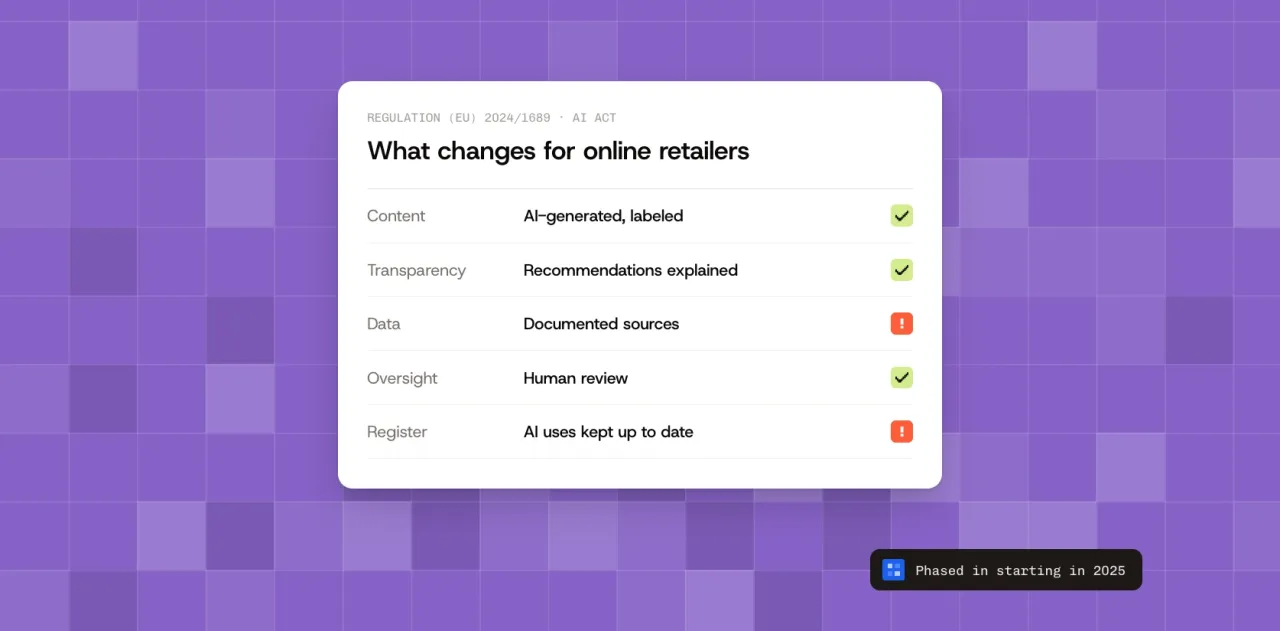
2025 marks a regulatory turning point for e-commerce players in Europe. The gradual entry into force of the European AI Act, the world’s first legal framework governing the use of artificial intelligence, will profoundly transform the way product content is created, disclosed and distributed.
And for merchants who use generative AI such as ChatGPT, Claude or Gemini to write product descriptions, FAQs or visuals, the obligations are clear: transparency, documentation, traceability.
1. What the regulation says
The AI Act, adopted by the European Union, sets out a simple principle: the greater the impact of an AI use on consumers, the stricter the compliance obligations.
For online retailers, the systems used are generally classified as “limited risk”, which implies:
- 01A transparency obligationthe end user must be informed that they are reading AI-generated content
- 02Documentation of the systems usedgeneration date, AI model used, prompt used, approval logic
- 03Editorial responsibilitythe company remains accountable for the accuracy of the information it publishes, even when generated automatically
Put simply: a product described by an AI can no longer be published without human approval and quality control.
2. What it changes in practice
For many merchants, using AI is already a reality. Whether to write product pages, feed a PIM or generate descriptions on the fly for marketplaces, automation has become a necessity.
But with the new regulation, what was a time saver also becomes a risk to manage:
- How do you prove that content was generated by AI?
- How do you track successive versions?
- How do you include a regulatory notice without hurting the user experience?
- How do you structure data so that it is both GEO-ready (Generative Engine Optimization) and compliance-ready?
3. The opportunity behind the constraint
Beyond the regulatory constraint, this framework opens up a major opportunity for the most structured brands and retailers.
Those who can provide content that is:
- enriched,
- traceable,
- compliant with Schema.org standards,
- interoperable with the upcoming Digital Product Passport,
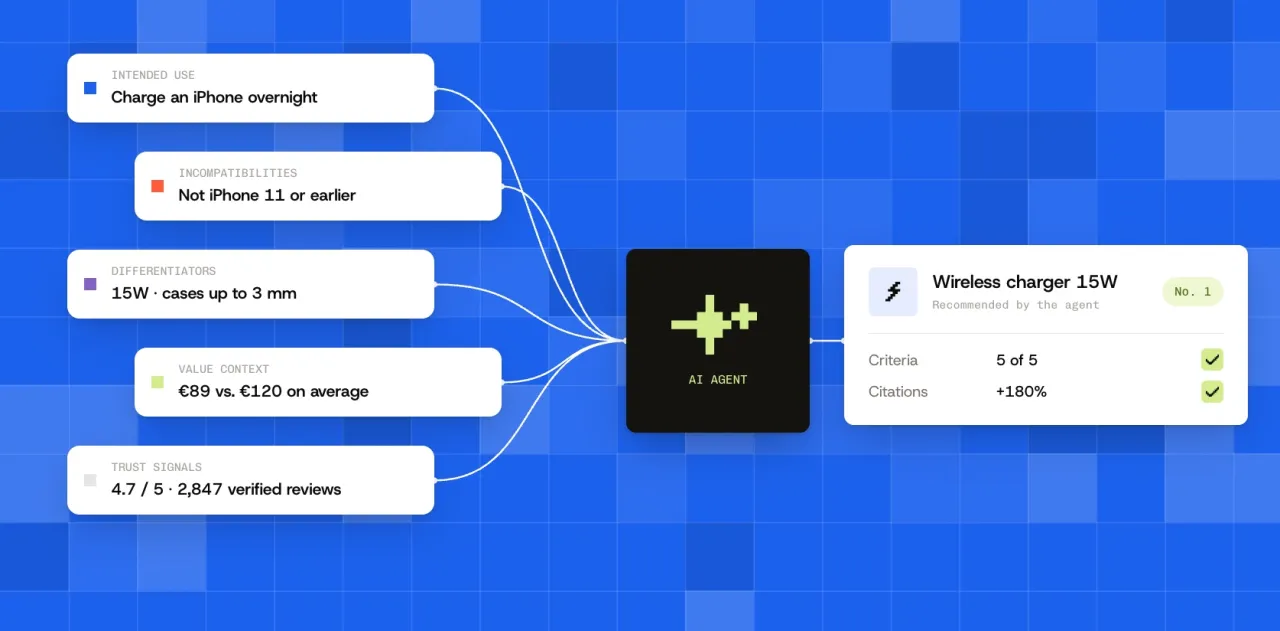
… will be the most visible in AI interfaces, conversational assistants and next-generation search engines. This is the content that will be picked up, cited, recommended and bought.
4. Upsellr, a solution designed for compliance and performance
This is precisely the context in which the Upsellr.io solution fits.
Upsellr automates the generation of product content (descriptions, attributes, FAQs, metadata…) while natively following a logic of structure, traceability and compliance:
- Systematic disclosure of AI use when needed.
- Logging of the generation process (source, date, AI model).
- Enriched content in standardized formats (JSON).
- Ready-to-use PIM and CMS connectors (Shopify, PrestaShop, PIM…).
- Direct preparation for Digital Product Passport requirements.
Upsellr thus combines production speed, regulatory compliance and visibility on AI engines.
In conclusion
European regulation on artificial intelligence is not a brake on innovation. It is an invitation to professionalize the use of AI in e-commerce, to build lasting trust between brands and consumers.
The online retailers who make this shift early will not just be compliant. They will also be best positioned to capture the new generation of conversational traffic.
What about you: is your catalog ready for the regulated era of AI?
 Marcus





 Amazon