









Are your tools driving performance or holding back product growth?
In most e-commerce companies, product content is both vital and neglected. Too often, having a PIM or a DAM is assumed to be enough to "manage" information.
In most e-commerce companies, product content is both vital and neglected. Too often, having a PIM or a DAM is assumed to be enough to “manage” information. The reality is that these tools, however powerful, guarantee neither the relevance, nor the quality, nor the commercial activation of your data.
And as buying journeys expand to marketplaces, conversational AI and built-in recommendation engines, simply managing information is no longer enough. What is needed today is complete orchestration of the product experience.
From managing product data to activating it
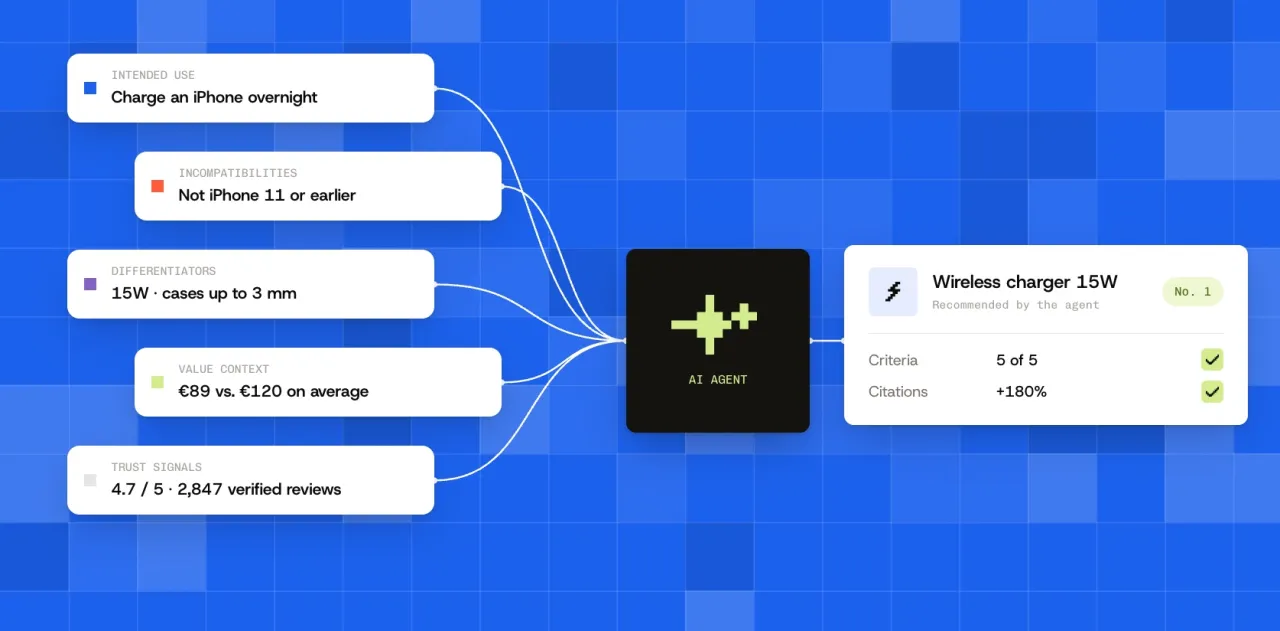
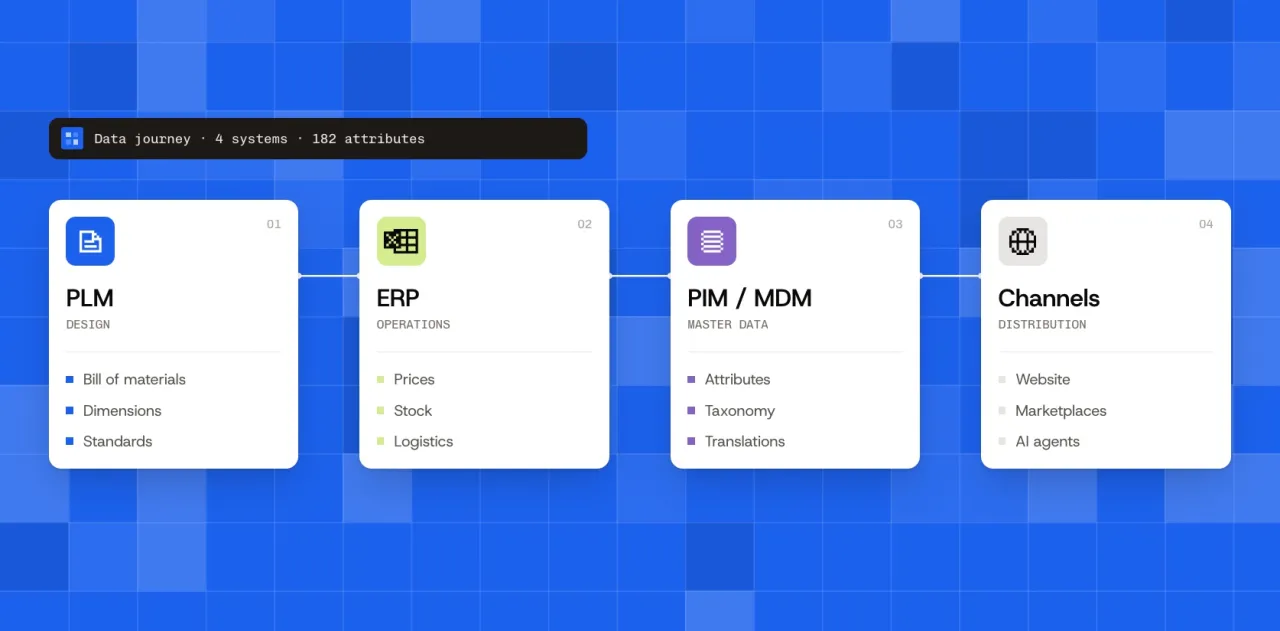
The common mistake is to believe that well-stored product information is necessarily well used. But between storage, transformation, personalization, SEO/GEO optimization, regulatory compliance, adaptation to marketplaces and the ability to generate multilingual content, there is a technology gap.
Storing ≠ Structuring
Structuring ≠ Adding value
Adding value ≠ Activating
What is changing today is that product content can no longer be a simple reflection of technical data. It is becoming a strategic lever that deserves constant attention, automated updates and contextual adaptation.
Three questions to test your organization’s maturity
Before investing in a tool or rethinking your tech stack, ask yourself these three simple questions:
- 01Is your content designed for humans AND for AI?Do your product pages answer generative engines (GEO) while staying clear and engaging for shoppers?
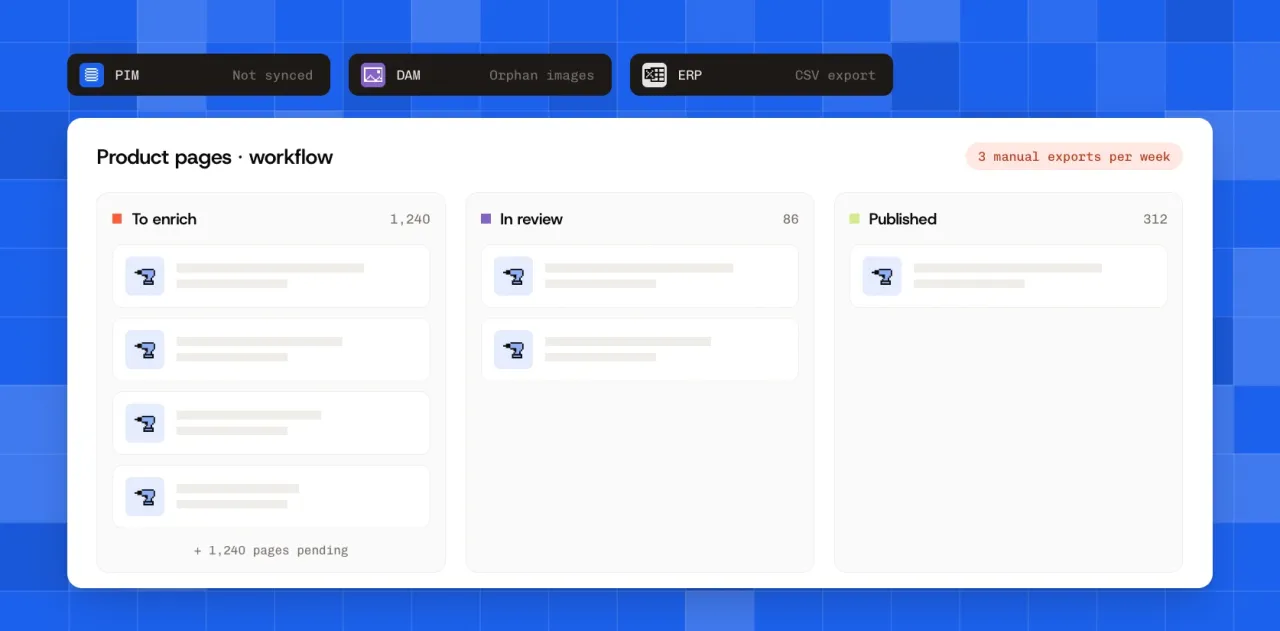
- 02Is your team autonomous or dependent on manual workflows?How long does it take to enrich, check, approve and distribute content, and can you do it at scale?
- 03Is your product content centralized, personalized and omnichannel?Can you automatically adapt content for a website, an Amazon listing, an AI engine or a product PDF?
If you answer “no” or “partially” to any of these points, it is not an organizational problem. It is a model problem.
The era of specialized AI agents: a new product infrastructure
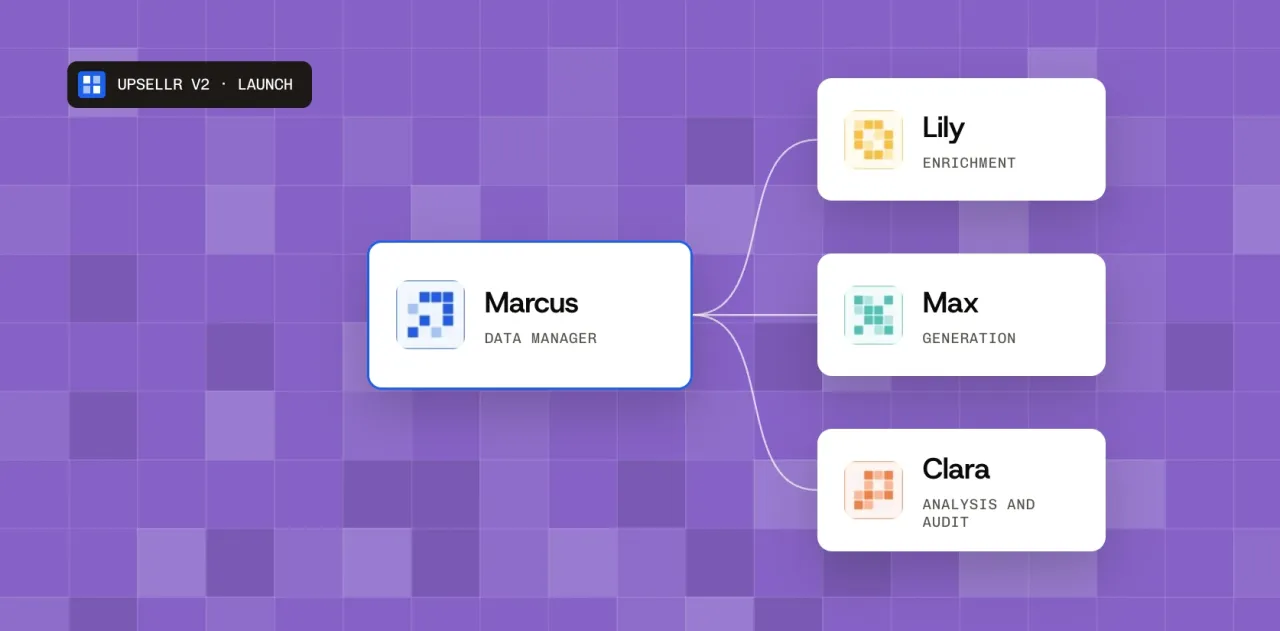
At Upsellr, we are making the opposite bet from traditional PIMs. Rather than asking our customers to adapt the way they work to complex tools, we have designed a technology that adapts to their reality.
Our AI agent works from your feeds, whatever they are. It automatically enriches your data, structures it in a consistent taxonomy, generates content tailored to each channel, then distributes it where it matters. At scale. And in a matter of seconds.
It is not management, it is activation.
It is not storage, it is value creation.
It is not a tool, it is an intelligent extension of your teams.
Rethinking the organization around value, not data
The challenge is no longer to have a product repository. It is to generate value from your product content. It is to turn every SKU into a sales opportunity. And that requires an integrated, modular, automated approach.
The companies that succeed in making their product content a competitive advantage are the ones that have made this shift: moving from static management to a dynamic, automated, continuous strategy.
 Marcus





 Amazon