









Product content quality: an underestimated, massive performance lever
For a long time, optimizing product content was seen as a secondary project, reserved for e-commerce or SEO teams.
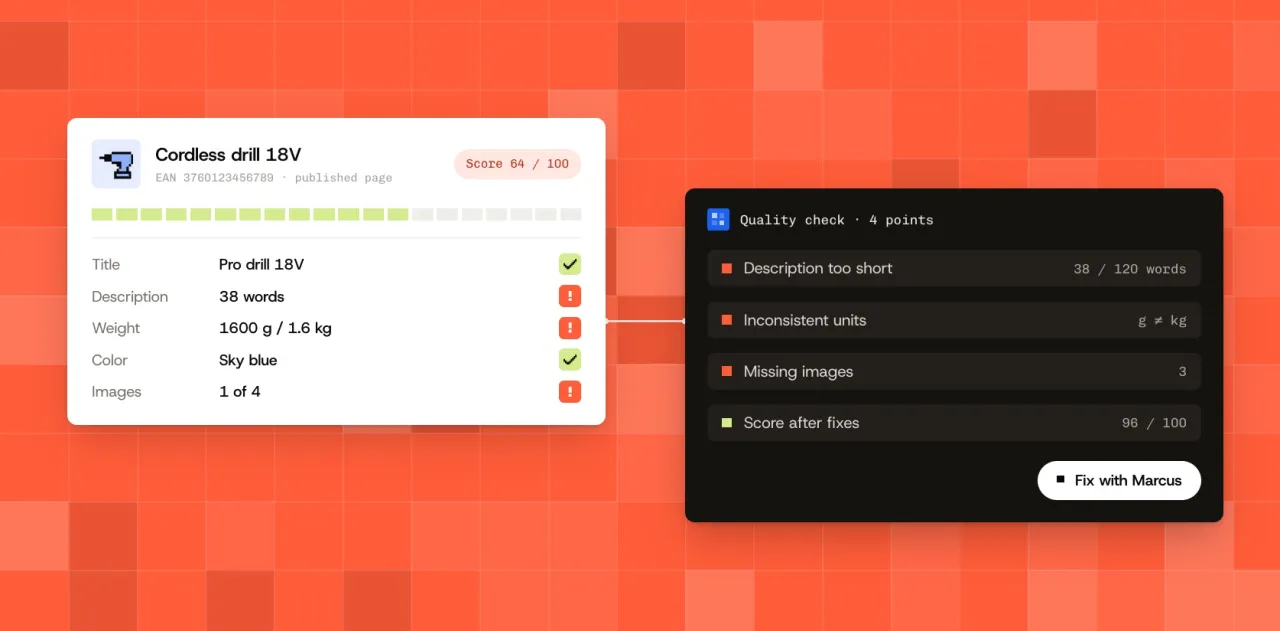
For a long time, optimizing product content was seen as a secondary project, reserved for e-commerce or SEO teams. But today’s reality is more radical: product content quality is now a strategic lever that directly affects conversion, visibility, loyalty, and even profitability.
As customer journeys fragment and touchpoints multiply (websites, marketplaces, apps, voice interfaces, AI), brands and retailers no longer have any margin for error. One approximate, poorly structured or partially completed piece of content, and the entire sales performance collapses.
The era of demanding omnichannel product content
Consumers now expect detailed, contextualized information that is consistent from one channel to the next. They want to understand quickly whether the product is right for them, whether it fits their need, how it works and how it compares with others.
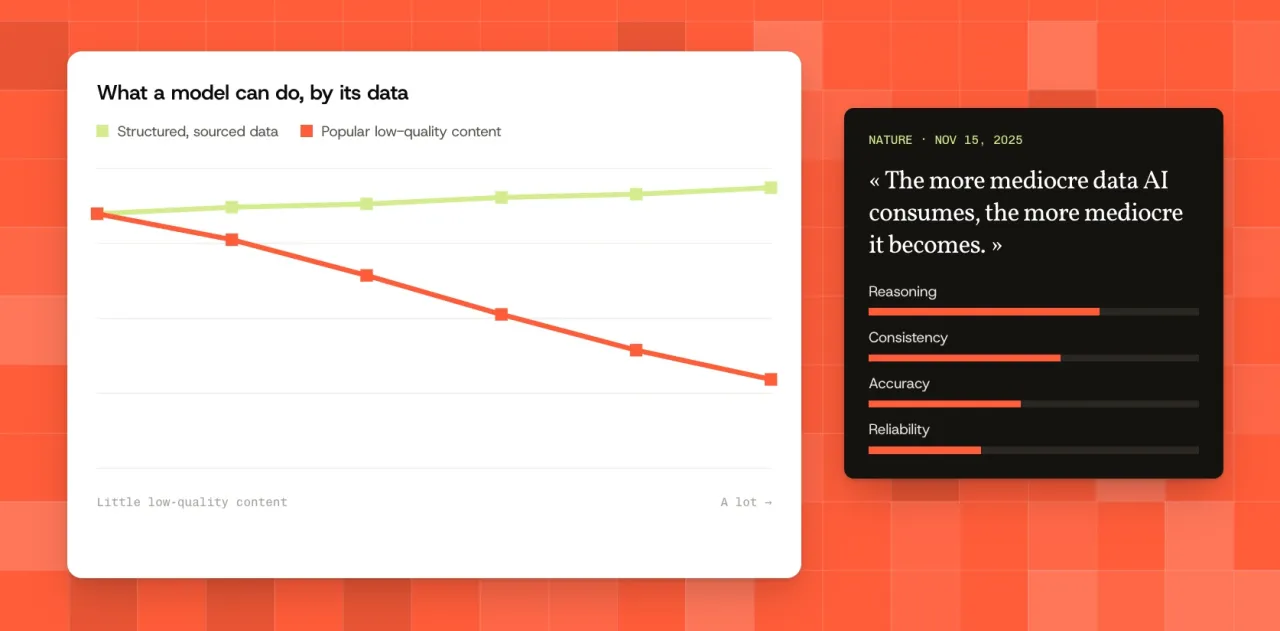
And this need for information is not limited to a few well-written paragraphs. It covers the full spectrum of product data: titles, descriptions, technical attributes, visuals, comparison content, FAQs and now, in the context of Generative Engine Optimization (GEO), the ability of that content to be interpreted by artificial intelligence.
An imprecise vocabulary, an inconsistent format, a miscategorized product page, and the whole discovery and recommendation chain seizes up. Algorithms do not list you, users have doubts, sales do not take off.
What poor-quality product content reveals
Poor-quality content is not just a drag on conversion. It is a symptom of internal disorganization.
It often reflects:
- An enrichment chain split across several tools or service providers
- A lack of editorial governance
- No standardization of technical data
- A poor understanding of sales platform requirements
- An underestimation of the impact of errors or vagueness on the user experience
The consequence? Concrete financial losses: product returns, abandoned carts, listing errors, longer time to go live, growing disintermediation.
The companies that come out ahead all have one thing in common
It is not always the most visible brands or the wealthiest retailers that dominate. It is those who have understood that product content quality is not an adjustment variable but a foundation. And who have managed to industrialize that quality at scale.
This means moving from a craft approach to rigorous management of product data:
- 01Automate structuringaccording to a consistent taxonomy
- 02Identify the distinguishing attributesfor each product type
- 03Normalize formatsfor every sales channel
- 04Generate relevant contentoptimized for SEO and GEO, in every target language
- 05Deploy tailored contentto each touchpoint (website, marketplaces, app, voice…)
AI in service of scalable quality
This is precisely what a solution like Upsellr makes possible. With an AI agent specialized in product data, we industrialize quality, with no compromise. Our approach is not limited to generating text. It starts with intelligent enrichment, goes through semantic structuring, categorization and verification, and extends all the way to omnichannel distribution.
We turn raw data (product name, EAN, supplier file) into content ready to be activated on every channel. All in a matter of seconds.
By standardizing quality, you secure the user experience, feed conversational engines, reduce returns and increase conversions. Above all, you save time and margin.
A simple truth: good product content is an asset
“Acceptable” content is no longer an option. In a saturated market, the only option is to aim for excellence, but an industrialized excellence. Because today, every piece of product content is a touchpoint, an opportunity to be found, understood and preferred.
And every piece of poor-quality content is a missed opportunity.
 Marcus




 Amazon