








GEO: optimize your content for generative engines, not just Google
SEO has long been the backbone of e-commerce visibility. But today a new reality is taking hold: users no longer just type keywords, they ask questions.
SEO has long been the backbone of e-commerce visibility. But today a new reality is taking hold: users no longer just type keywords, they ask questions. And they expect precise, reliable, contextualized answers. Not ten links, but a synthesis. Not a list of products, but a single recommendation.
It is in this new context that an essential discipline is emerging: GEO, Generative Engine Optimization.
GEO: when product content becomes the source, no longer the target
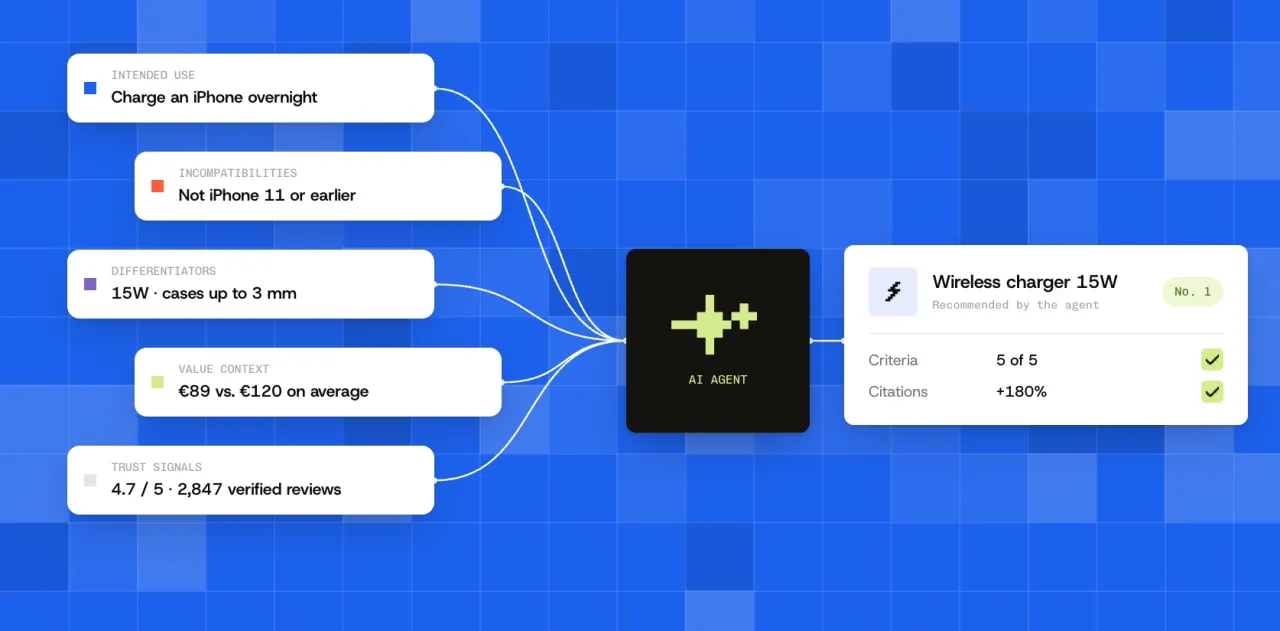
AI assistants like ChatGPT, Perplexity, Gemini, or the interfaces built into e-commerce sites and mobile browsers no longer just index content: they interpret it. Their logic is not ranking, but understanding. What they look for: clear, structured, well-argued content with usable data.
For brands and retailers, this implies a profound change: no longer writing for engines, but to be cited in a generated answer. Put simply, your product page must no longer just exist, it must convince the AI that it deserves to be cited.
GEO does not replace SEO, it goes beyond it
This is not about turning your back on SEO. It is about extending it and adapting it to the new cognitive mechanics of language models. Where SEO rewards keywords, GEO rewards structure, precision, completeness and clarity.
What AI assistants value:
- An explicit taxonomy (product > category > use)
- Well-filled attributes (“attribute: value” format)
- Benefits expressed in context
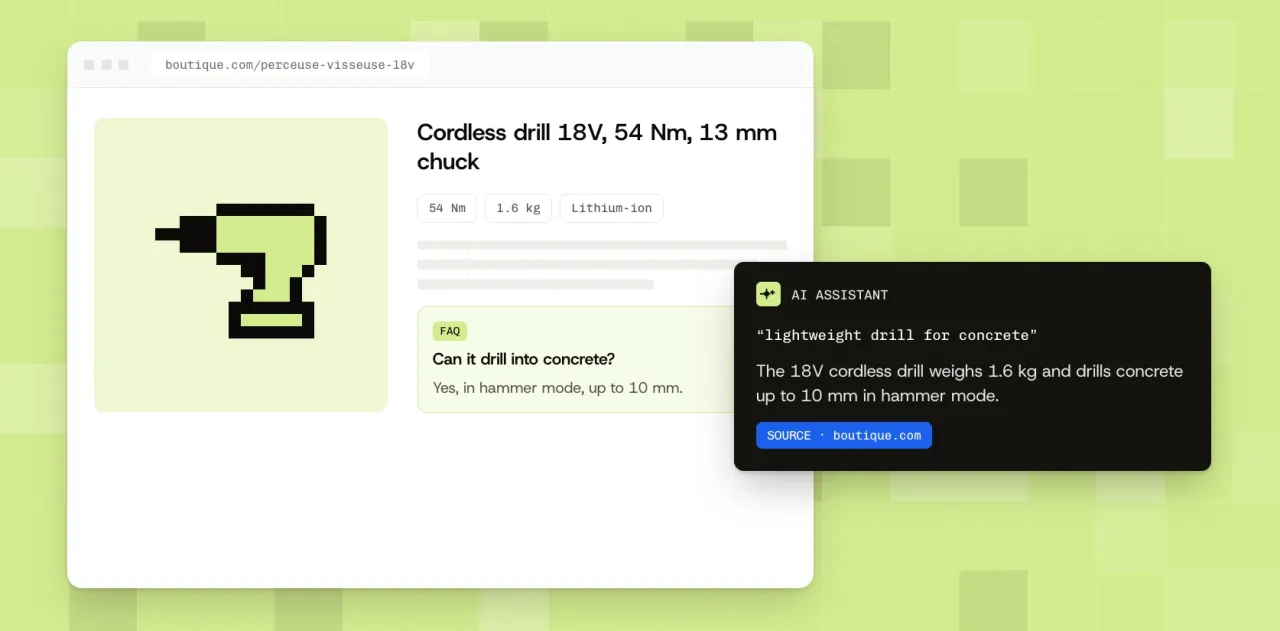
- An FAQ written in natural language
- Narrative descriptions illustrating use cases
- Consistent content across platforms
In short, content that is interpretable, not just readable.
The GEO method: think like an AI, structure like a writer
The heart of a good GEO strategy rests on three pillars.
- Structure the data
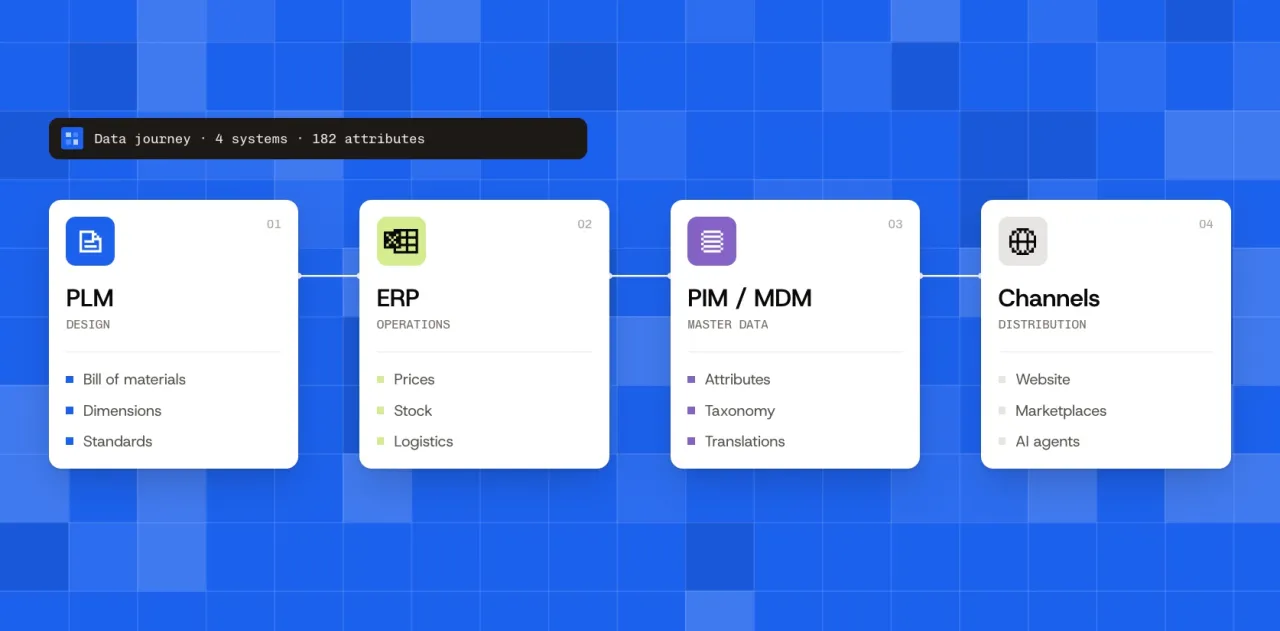
Each product page should be seen as a usable semantic block. Not a shop window, but a database: technical attributes, clear classification, compatibilities, metadata (EAN, labels, materials…). - Generate GEO-ready content
This does not mean producing generic text. It means producing:- a concise intro (80 words max) on how the product is used
- key benefits as a clear list
- a narrative paragraph illustrating the problem the product solves
- an FAQ anticipating common questions (care, compatibility, warranties…)
- SEO content (title/meta) designed for voice or conversational search
- Standardize at scale
GEO is not managed by hand, it is automated. This is where tools like Upsellr come in: they let you produce, in a matter of seconds, structured, contextualized product pages that meet the requirements of AI assistants and the formats of marketplaces.
GEO is a performance accelerator, not a technical fad
The results are measurable:
That is the difference between being found and being recommended.
Upsellr, a GEO catalyst by design
At Upsellr, we have built a solution designed natively for GEO. Our AI agent turns a product identifier (EAN, SKU, name…) into a complete product page, contextualized, optimized and tailored to each channel. We do not make “AI content”. We produce knowledge blocks that AI can read.
Every description, every attribute, every FAQ answer is generated from a reliable technical database. The result: content that performs, but is also interpretable by humans, engines and language models alike.
Conclusion: If SEO lets you exist in the jungle of search results, GEO lets you stand out in the intelligent dialogue. Do not miss this new standard of visibility: structure your content for the era of generative engines, or let your competitors be the answers instead.
 Marcus





 Amazon